A garage door hardly ever falls short at one time. Most of the moment, it begins with a noise that was not there last month, or a minor tilt that makes the bottom seal touch the flooring on one side before the other. Home owners obtain made use of to these changes due to the fact that the door still opens, still shuts, and still seems to do its task. Then one cool morning it shudders halfway up, the opener strains, and the entire system reminds you that a garage door is not a basic panel on hinges. It is a hefty, counterbalanced equipment moving several times a day over your vehicle, your stored items, and usually the main entry to your home.
Noisy and out of balance doors are two of the most typical factors individuals ask for residential garage door repair. They are also carefully relevant. A door that has actually stumbled places additional lots on rollers, tracks, joints, cords, and the garage door opener. Parts that are compelled to function more challenging get louder prior to they fail. In the area, that pattern shows up regularly. A client records shrilling on top of travel, however the much deeper concern ends up being a weakening springtime. One more claims the door "simply really feels heavy," and you can listen to dry rollers babbling since the weight is no more being brought correctly.
Understanding what those signs and symptoms indicate assists you make much better repair work decisions, prevent avoidable damages, and understand when an issue has actually moved from frustrating to unsafe.
What a balanced garage door is meant to really feel like
An appropriately well balanced garage door does not drift open by itself, and it does not crash downward when you disconnect it from the opener. If you lift it by hand to concerning midway and release very carefully, it ought to stay near to that setting. It may wander a couple of inches, but it must not race up or slam down. That straightforward test exposes a whole lot, since the balance of the door relies on spring tension matching the weight of the door.
Most household systems use either torsion springtimes mounted over the opening or expansion springs running along the horizontal tracks. Torsion systems are much more common on modern homes since they tend to operate more smoothly, last much longer, and supply far better control. Expansion systems still exist in older garages and can function well when kept, yet they usually create extra noticeable motion and more noise.
When equilibrium is off, the opener ends up being a crutch. Lots of property owners think the motor lifts the whole door. It does not. A garage door opener is developed to direct the door, not deadlift a pair hundred extra pounds. On a double-wide steel protected door, the complete weight can conveniently drop in the 140 to 220 extra pound array, and wood or full-view doors can evaluate extra. Springs offset most of that weight. Once they damage, break, or are inaccurately matched, every various other element pays for it.
Why garage doors get noisy
Noise is just one of the earliest warning signs, however the kind of noise issues. A grinding sound points in a different instructions than a pop, squeal, or rattle.
Rollers are constant wrongdoers. Older steel rollers can end up being loud as bearings use or lubrication dries. Nylon rollers generally run quieter, yet even they can establish rough bearings over time. Hinges can click and chatter when fasteners loosen up or pivot points wear. Tracks can intensify vibration if they are slightly curved or if installing brackets have pulled away from mounting. Springs can moan during traveling, particularly if they are completely dry, aging, or under pressure from bad equilibrium. An opener can likewise add noise with a worn drive gear, loose chain, or vibration moved right into ceiling joists.
One of the a lot more deceptive situations is a door that seems like the opener is stopping working when the opener is just responding to a door trouble. You hear stressing, jerking, and a hard quit at the floor. The opener gets criticized due to the fact that it is the powered device making the racket, yet the source may be track resistance, spring exhaustion, or a door section that has actually shifted out of alignment.
Seasonal modifications can make noise even worse. In winter season, lubrication thickens, steel contracts, and brittle rollers show their age. In summer, expansion can alter clearances enough to expose a weak point. A door that was partially stabilized in moderate weather condition may end up being obviously troublesome when temperatures swing.
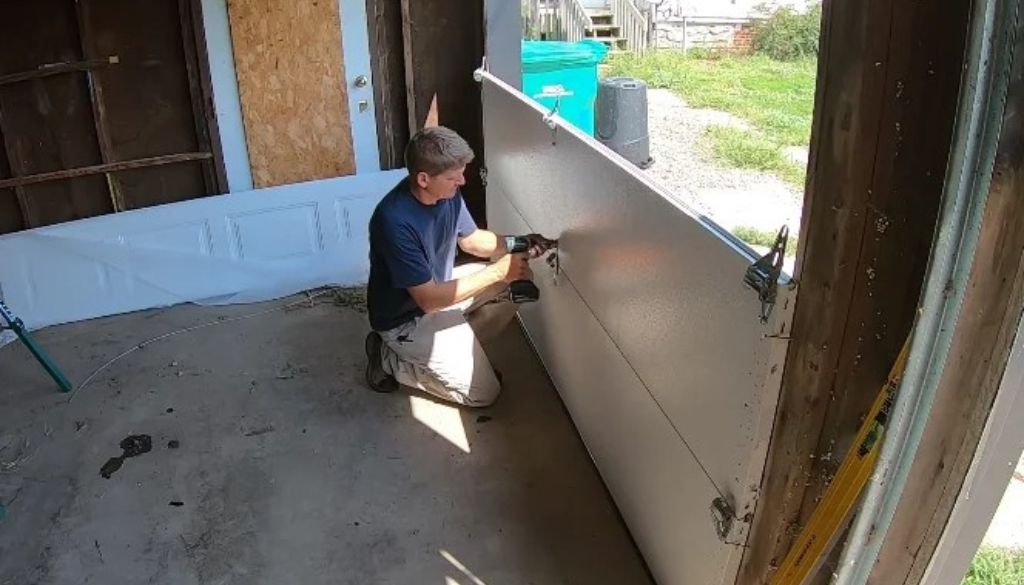
The specific indications of an out of balance door
An out of balance door usually introduces itself in small, functional ways before it becomes significant. You may see one side lifting slightly in advance of the other. The opener might wait at the beginning of travel. The door might not completely seal along the floor, leaving daytime at an edge. You may likewise see cables that look unequal on the drums, or listen to the door hit the stop screw harder on one side during operation.
Sometimes the indication is exertion. If a door feels remarkably heavy when you draw the emergency situation release and attempt to raise it by hand, equilibrium is suspicious right away. A healthy and balanced system still maintenance services for garage doors carries weight, naturally, but it should not really feel like battling a sheet of plywood taken in water.
Here are five indicators that normally justify a closer inspection:
The door will not hug the halfway point when lifted manually. The opener stress, jerks, or reverses without a noticeable obstruction. One side of the door hangs lower or moves ahead of the other. You hear brand-new standing out, grinding, or shrilling during travel. The door shuts erratically versus the floor or side seals.A solitary symptom does not always indicate major repair, but several together typically indicate that routine lubrication alone will not address the problem.
Springs are often the concealed source
If I had to call the element frequently behind noisy and out of balance procedure, it would be the springtime system. Springs do the invisible hefty lifting, and they wear out gradually up until they do not.
Torsion springs are rated in cycles, with one cycle being one complete opening and closing of the door. Requirement springs are often ranked around 10,000 cycles, though higher-cycle choices are readily available. In a house where the garage door is the primary entryway, that life expectancy can be shorter than individuals anticipate. Four cycles a day reaches 10,000 in under 7 years. Hectic homes can surpass that easily.
A spring does not need to be fully damaged to create difficulty. It can lose tension gradually, producing an imbalance that appears as heavy procedure, irregular travel, and louder activity. In a two-spring system, one spring might break while the other stays intact, leaving the door misaligned and dangerous to operate. Homeowners in some cases assume, "It still opens up, so possibly I can wait." That is rarely smart. Remaining to run the opener can stress out the motor, damages the rail, strip equipments, or pull the top section of the door.
Garage door spring substitute is just one of one of the most typical significant repairs in property work, and for good factor. Springs are palatable parts. They are also under extreme tension, which is why this is not a laid-back do-it-yourself task. An incorrect winding bar, an incorrect springtime dimension, or a loose collection screw can transform a repair work right into a severe injury.
Why rollers, joints, and tracks issue greater than people think
Springs obtain the focus, however a smooth, quiet door depends on the entire course of movement. Rollers should relocate cleanly in the track without tottering. Hinges require to pivot without slop. Tracks requirement to be appropriately aligned, securely fastened, and free of dents that pinch rollers at certain points in travel.
I have actually seen lots of doors where the issue was "loud opener," yet replacing a collection of worn steel rollers with quality nylon sealed-bearing rollers altered the entire personality of the system. The difference is not refined. Rattling become a low mechanical hum. Vibration via the framing declines. On rooms over garages, that can matter a lot.
That said, quieter parts are not a magic bullet. If the door is out of balance, new rollers will still be asked to soak up unnecessary pressure. Good repair means fixing reasons in the right order. Equilibrium first, after that rubbing factors, then opener adjustments if needed.
Track issues deserve careful judgment. Mild imbalance can be fixed. Severe bends, broken braces, or tracks that have actually been struck by an auto or ladder often require replacement. Forcing a damaged track back into area even if the door can practically move via it is not a quality repair work. It is a hold-up tactic.
The opener becomes part of the system, not the whole system
A garage door opener usually takes the blame because it is the part house owners connect with a lot of. Remotes fail, wall buttons fail, and electric motors eventually wear. Yet an opener can not make up for a negative door forever.
Chain-drive openers are resilient and usual, though they tend to be noisier than belt-drive units. Belt-drive openers run quieter and are prominent in attached garages where living area sits close by. Screw-drive versions exist too, with their own upkeep patterns. No matter design, every opener depends upon appropriate door balance and proper pressure settings.
When a door becomes hefty or sticky, lots of people are attracted to raise opener force. That may get the door relocating again briefly, but it also covers up the warning signs and can produce safety and security concerns. If pressure settings are pushed too far, the opener may not reverse properly when it experiences resistance. That is not the location to improvise.
A quality garage door repair check out usually consists of opener evaluation, but only after the professional validates the mechanical health of the door itself. Once the door is well balanced and relocating openly, opener traveling limitations, force settings, rail add-on, and drive components can be adjusted precisely. If the opener has actually been strained for months, it might still need repair work or replacement, yet that diagnosis becomes much clearer after the door mechanics are corrected.
When repair work makes sense, and when setup is the smarter move
Not every loud or out of balance door needs full substitute. Lots of doors respond effectively to targeted repairs, specifically when the sections are structurally audio and the tracks are in good shape. Changing springtimes, rollers, cables, bearings, and joints can restore years of solution to an otherwise strong door.
There are instances, however, where garage door installation is the much better long-term option. If the door has multiple split areas, extreme corrosion at the bottom, delamination in timber panels, or outdated components that are hard to source, repair work expenses can begin accumulating without solving the bigger trouble. This is specifically true when an old door has bad insulation, does not have modern security features, or does not combine well with a newer opener.
A typical example is the older one-piece or lightweight pan-style door that has actually been repaired repetitively. If the homeowner wants quieter procedure, better securing, and enhanced visual charm, continuing to patch that system may not be the best financial investment. A modern sectional shielded door with a matched opener usually supplies an obvious enhancement in sound, power efficiency, and reliability.
Commercial buildings deal with similar decisions, though the computations differ. Business garage door repair frequently focuses on uptime, duty cycle, and hardware sturdiness over visual appeals. On the household side, property owners typically stabilize expense with convenience, security, and appearance.
What homeowners can securely inspect prior to calling for service
A few monitorings deserve making prior to you arrange service, yet they ought to stay on the secure side of the line. You do not require to disassemble anything to collect beneficial information.
You can stand inside the garage with the door closed and search for noticeable cord fraying, loose hinge screws, bent track areas, or a space in a torsion springtime that indicates a break. You can listen to where the noise takes place, at startup, mid-travel, or near full open. You can likewise disengage the opener only if the door is completely shut and examination whether the door feels abnormally heavy when lifted carefully.
What you must not do is loosen spring hardware, get rid of bottom brackets, or tamper with cords under tension. Those parts are not forgiving.
A short home owner checklist works here:
Check whether the door is more challenging to raise than it made use of to be. Listen for where the noise starts and whether it duplicates at the exact same spot. Look for loose hardware, used rollers, or visibly harmed track. Confirm that the opener reverses effectively when checked according to the maker's instructions. Stop utilizing the door if you see a damaged spring or hanging cable.That last point conserves a lot of secondary damage. A service require one busted spring is irritating. A service ask for a busted spring plus a burned-out opener and bent leading section is much more pricey and extra disruptive.
What specialist household garage door repair must include
Good service is not just switching one of the most apparent fell short part. A professional ought to review the whole os because noise and imbalance often have more than one contributor.
In a correct go to, the tech ought to consider or approximate door weight appropriately for spring selection, inspect cables and drums, examine bearing plates, testimonial track positioning, analyze rollers and joints, and validate opener function after the door mechanics are restored. If springs are being replaced, cycle life and right sizing issue. Setting up the wrong spring set can make the door "job" while continuing to be somewhat out of equilibrium, which shortens the life of everything else.
Lubrication also requires some nuance. Not every element wants the exact same product. Springs, bearings, and joint pivots gain from the right garage door lubricating substance. Tracks typically needs to not be greased greatly since that draws in grit and produces an unpleasant drag path. More lubricant is not automatically better.
Experienced service technicians additionally look for architectural issues around the door. Timber jambs can rot. Lag screws can loosen up in framework. Header brackets can shift. A door that has actually gone out of square might be informing you something regarding the opening, not simply the relocating parts.
Cost, value, and the expensive habit of waiting as well long
Homeowners frequently postpone garage door repair since the door is still technically functional. That is reasonable, but waiting has a tendency to raise the costs. A rough roller today can come to be a used joint and marked track later on. A weak spring today can come to be an opener repair work next month. A cord that is starting to battle royal can jump a drum and leave the door obstructed at an angle.
Costs vary by region and by door kind, so broad varieties are extra truthful than exact promises. Small tune-up job and roller replacement are normally on the reduced end. Garage door spring substitute, cable substitute, or opener fixing land in the middle. Complete garage door installment sets you back even more up front, yet can make good sense when an old door is consuming money in repeated visits.
The worth question must consist of greater than the billing. A garage door is part of your home's security envelope and frequently part of its everyday routine. If it fails outdoors placement, your schedule changes right away. If it fails closed with a vehicle entraped within, the interruption is just as real.
Choosing the appropriate repair path for a loud, unbalanced door
The right fix depends upon what failed, what is put on, and how old the remainder of the system is. A six-year-old insulated steel door with a broken torsion spring is normally a simple repair. A twenty-year-old door with rusted lower fixtures, curved track, loud metal rollers, and an opener that has been straining for years needs a larger conversation.
That is where experience matters. There is a distinction between a technician that can make a door relocation today and one who can inform you whether the system will still be trustworthy 6 months from currently. Honest referrals usually appear well balanced. Repair what is reasonable. Replace what is harmful or expensive. Do not offer a whole system when a targeted repair work will do, and do not keep restoring a damaged door just to hold off the obvious.
For property owners, the sensible takeaway is simple. Noise is not simply cosmetic, and imbalance is never something to neglect. When a garage door begins seeming harsh, lifting unevenly, or feeling heavy, it is requesting for focus before a little fixing becomes a larger one. Timely household garage door repair secures the opener, prolongs the life of the door, and maintains one of the largest moving components in your home operating the way it should, efficiently, safely, and without making the whole home listen to it.