A garage door is among the biggest moving components in a home, and brand-new house owners usually acquire it with extremely little background. You may obtain records for the roof, the heater, even the hot water heater. The garage door usually features a remote, a wall surface switch, and a shrug. After that, on the very first cool morning or during the very first hefty rain, it advises you that it has its own maintenance needs.
That issues due to the fact that a garage door is not a basic piece that fluctuates. It is a system under stress. Tracks guide the rollers, cords lift the weight, springtimes store energy, hinges flex under repeated use, and a garage door opener coordinates the movement. When one component wanders out of adjustment, the issue rarely stays separated for long. A loud roller can come to be a frayed wire. A door that shuts unevenly can strain the opener. An ignored springtime can fall short at the worst feasible time.
For brand-new property owners, the goal is not to become a service technician overnight. It is to know what to inspect, what you can securely keep, and when to quit and ask for expert domestic garage door repair. A little judgment goes a long way right here. I have actually seen house owners conserve hundreds by capturing worn rollers early, and I have actually likewise seen costly damage caused by a well-meant effort to "just tighten up a few points" around a high-tension spring assembly.
Start with the age and kind of door you have
Before you touch anything, spend a couple of minutes discovering what is installed in your garage. Older steel doors typically reveal rust along the bottom edge and around trim screws. Timber doors may look captivating from the driveway yet can take in moisture, swell, and upset in time. Protected sectional doors tend to be quieter and a lot more secure, though harmed panels can be costly to replace. One-piece tilt-up doors, while much less common now, operate in a different way and require a various troubleshooting mindset.
Look at the spring system over the door opening or along the straight tracks. Most contemporary doors use torsion springtimes mounted on a shaft over the header. Some older systems use extension springs that stretch along the tracks. That difference issues since Garage door spring substitute is not a laid-back weekend break job. Torsion systems, specifically, store enough pressure to create significant injury if managed without the ideal bars, clamps, and training.
If you recently purchased your home, ask the seller, building contractor, or representative whether the door became part of a recent garage door installation. Even a harsh install date assists. A well-maintained door can last years, but springtimes and openers have solution lives determined more by cycles than by fiscal year. A family members that makes use of the garage as the primary entry may run the door four to eight times a day, in some cases more. That adds up quickly.
Your first walkthrough must be sluggish and quiet
The most helpful initial examination is typically the least dramatic one. Stand inside the garage with the door closed. Do not push the opener today. Just look.
Check whether the bottom seal rests equally on the floor. Daylight at one corner can recommend a flooring incline, a warped panel, or a positioning issue. Analyze the tracks for bends, voids at placing brackets, or glossy wear marks where rollers are rubbing more difficult than they should. Look for loose lag screws at the jamb braces and header. In newer homes, framing activity after settling can a little change these anchor points.
Then open the door and listen meticulously. A healthy and balanced door has some mechanical sound, yet the sound ought to be steady. Sharp popping, a metallic snap, grinding, or a hefty shudder at one factor in travel should have focus. Among the most typical homeowner summaries is "it still works, however it appears angry." That is usually precise. Garage doors frequently alert you before they fail.
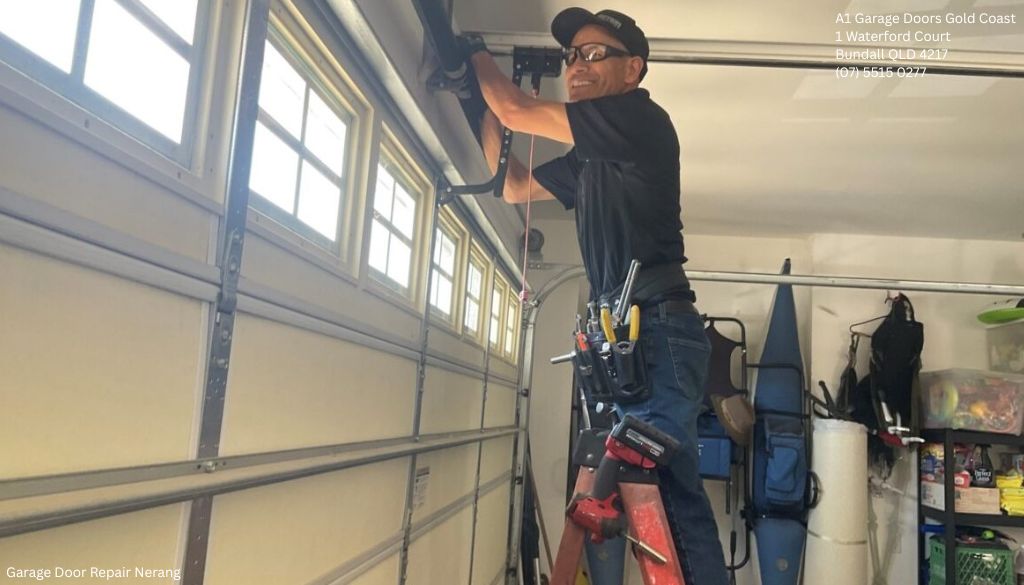
This is also the moment to evaluate the opener rail, chain or belt, and the connection arm in between the opener cart and the door. If the door panels totter throughout travel, the concern may not be the opener whatsoever. A door that runs out balance can make a solid garage door opener seem weak.
The five checks every new house owner must do first
- Test the door balance by separating the opener with the emergency situation release and lifting the door by hand to about midsection height. It needs to stay near to where you leave it, not collapse down or shoot upward. Inspect rollers, hinges, and tracks for noticeable wear, breaking, corrosion, or loosened fasteners. Nylon rollers with worn bearings commonly get noisy before they fail. Check the picture eyes near the floor on both sides of the opening. They must face each other, reveal constant sign lights, and rest devoid of dirt, cobwebs, or storage space clutter. Examine weather seals at the bottom and along the boundary. Brittle seals allow water, dust, bugs, and cold air, and they can hide alignment problems if ignored. Run the safety and security reverse examination by putting a tiny item of timber, such as a scrap 2x4 laid flat, in the door's path. The door needs to reverse when it calls the object. If it does not, stop utilizing the opener until it is adjusted or repaired.
That short list catches a shocking share of typical troubles. It additionally separates straightforward maintenance from true repair. If the equilibrium examination falls short, as an example, stand up to the temptation responsible the opener. An opener is developed to assist a well balanced door, not make up for negative springs.
Balance informs you more than practically anything else
If I might choose just one diagnostic action for a brand-new property owner, it would certainly be the equilibrium check. A garage door that feels much heavier than expected or refuses to stay midway open is informing you the springtime system is refraining from doing its work. That can suggest the springtimes are used, one spring has actually damaged, or the door was never ever appropriately changed after a previous repair.
This matters due to the fact that opener strain is often a second signs and symptom. Property owners often call about a "negative motor" when the opener is in fact battling a door that has ended up being also hefty. The opener might still move it for some time, but it does so by functioning much outside its designated lots. That extra pressure can strip gears, loosen braces, and reduce the life of the motor and logic board.
An appropriately well balanced double door still carries weight to it, but it needs to really feel regulated. If it goes down quick the minute you let go, deal with that as a critical service issue. Springs wear progressively, a lot of people do not see the adjustment till the door comes to be clearly difficult to raise. At that point, Garage door spring replacement is normally the appropriate solution, and it is a task for a trained technician.
Rollers, tracks, and pivots be entitled to a closer look than they normally get
Most house owners observe panels and springtimes initially. The smaller sized hardware typically gets overlooked until it starts screaming. Rollers are a good example. Steel rollers can last a long time, yet they get loud as they put on. Nylon rollers have a tendency to be quieter and are common in newer doors, though lower-grade variations can crack or develop careless bearings. A single stopping working roller can make the whole door shake.
Tracks ought to look plumb on the vertical sections and degree to somewhat pitched on the horizontal runs, relying on the arrangement. They do not need lubrication on the running surface area. In fact, a greasy track frequently produces more mess than advantage because it collects grit. What helps extra is keeping tracks clean and making certain installing braces continue to be tight.
Hinges inform their very own tale. Elongated screw openings, bent leaves, or dark metal dust around pivot points suggest motion and wear. On vast doors, a failing center joint can show up as panel flex or an irregular traveling pattern. Changing a worn joint is straightforward sometimes, yet if the panel itself is fracturing around the hinge area, you require an even more cautious repair plan.
Lubrication aids, however just in the appropriate places
A little lubricant made use of effectively can silent a door and reduce wear. Way too much, or the wrong kind, can develop crud and disappointment. For a lot of property systems, the right targets are roller bearings, hinge pivot factors, the torsion spring surface, and the bearing plates. Make use of a garage-door-specific lubricant or a light spray designed for metal moving components. Hefty grease is typically not the answer.
Do not saturate whatever. You desire a light application, then a couple of door cycles to disperse it. Clean excess. Tracks normally require cleansing, not finish. The chain on a chain-drive opener may require modest lubrication depending upon supplier assistance, while belt-drive systems call for a different technique and are often quieter by design.
I once looked at a door that sounded like a products elevator and located the tracks covered in vehicle grease while the joints were bone completely dry. The owner had been "lubing it every few months" and can not recognize why the noise kept becoming worse. When the tracks were cleaned and the actual pivot factors treated, the distinction was immediate.
Safety sensing units are easy till they are not
The image eyes near the floor seem minor, however they are just one of the most common reasons a garage door will not close correctly. If the door starts down and afterwards reverses, or the opener lights blink in demonstration, check the sensors prior to thinking the opener has failed.
Dust, a bumped bracket, strong sunshine at a particular angle, or a box stored as well close to the beam of light path can all produce problem. On homes with kids, bikes, sports gear, and yard tools, sensor placement gets interrupted regularly than many people recognize. Clean the lenses gently and validate the indicator lights are steady. If one is dark or flickering, alignment or wiring may be the issue.
This is one place where your own troubleshooting can be useful without becoming risky. If the brackets are noticeably curved, however, or if the low-voltage circuitry has actually been mated badly for many years, call for service. Sensing unit issues are basic when they are simple, and infuriating when they are not.
What the opener can and can not tell you
A garage door opener gets condemned for several points that originate elsewhere. It is still worth looking at its own terms. Note whether you have a chain-drive, belt-drive, screw-drive, or jackshaft system. Belt drives are generally quieter and popular in connected garages because they transfer much less resonance into the space. Chain drives are long lasting and common, though they can obtain louder with age. Jackshaft openers liberate ceiling area but depend on a door and spring system that is in excellent condition.
Listen to the electric motor. A hum without motion can mean the opener is attempting but stopping working to relocate the door, occasionally as a result of a confiscated component or a door that is also hefty. Intermittent operation can point to warm defense, a failing capacitor in some designs, wall control issues, or logic board problem. Remote array troubles may be as straightforward as weak batteries, but they can additionally originate from LED light bulb interference, antenna damage, or receiver issues.
If you are moving into an older home, reset gain access to codes and reprogram remotes as soon as possible. That is a security action, not just a convenience step. Also check the emergency release cord. It ought to hang accessibly, but not so low that it captures on cars and truck roofing shelfs or saved items.
Signs that call for a specialist, not a do it yourself attempt
- A springtime is damaged, extended abnormally, or reveals a clear void in the coil. Cables are frayed, off the drum, or noticeably slack on one side. The door is crooked in the opening, binds hard, or jams with one side greater than the other. Panels are broken at hinge factors or the leading section is bowing where the opener arm connects. The opener force setups have already been readjusted, yet the door still has a hard time, turns around unexpectedly, or bangs shut.
These are not "see it for some time" conditions. They are stop-and-schedule-service problems. With springs and cable televisions, specifically, the pressures included can transform a manageable repair service into a harmful event very quickly.
Weather seals, water, and the hidden damages they cause
New house owners frequently concentrate on motion and sound, but securing issues also. The lower astragal and boundary weather condition stripping keep out more than drafts. They minimize wetness intrusion, prevent pests, and help avoid particles from accumulating in the track location. In cold environments, a falling short bottom seal can adhere the piece overnight. When that takes place, the opener might pull consistently against a stuck door, worrying both the arm and the top section.
Water breach is hard on steel doors. It accelerates corrosion at cut edges and lower retainers. On wood doors, it can trigger delamination, swelling, and surface failure. Also in a relatively mild climate, duplicated wet-dry cycles shorten the life of trim and fasteners around the opening.
If one edge of the seal does not touch the flooring, do not presume the installer did a poor work. Garage floorings typically slope for drain, and several are not flawlessly level. Often the best solution is a brand-new seal account or limit. Often the door requires adjustment. Good property garage door repair work typically involves fixing exactly this sort of little however persistent mismatch.
Don't disregard the mounting points
The equipment linked to the house framework matters as high as the equipment linked to the door. Take a look at the spring support brace, track brackets, opener header bracket, and ceiling hangers. In some garages, especially those used heavily for storage or where resonance has gone unattended for many years, commercial garage door maintenance lag screws loosen up in framework. I have actually seen opener header brackets holding on by one persistent bolt while the other holes had actually wallowed out in old lumber.
That kind of movement alters the geometry of the system. It can make a formerly peaceful door noisy, modify pressure settings, and gradually split panel attachment points. If you observe fresh timber dirt, split drywall near the header, or a visible void behind a brace that must stand by, have it evaluated.
New develop, resale, and inherited shortcuts
A new homeowner in a just recently constructed home faces various garage door concerns than somebody getting an older resale building. In a brand-new develop, the door itself might be in good condition, yet minor settling and seasonal mounting activity can influence track positioning and seal contact throughout the very first year or 2. Builder-grade openers can also be standard units that do effectively yet not specifically quietly or smoothly.
With older resales, the bigger issue is commonly improvisated repair work history. You may locate unrivaled rollers, combined bolts, a global remote receiver zip-tied near the opener, or force settings turned up to mask a balance trouble. Those are not constantly disasters, but they do imply you must check with healthy skepticism.
There is a lesson right here that goes across over from commercial garage door repair as well. In both residential and commercial settings, duplicated small workarounds produce larger failures. A door system rewards correct adjustment and punishes shortcuts. The range is various in a warehouse bay than in a rural garage, however the principle is the same.
When replacement makes even more sense than repair
Not every problem ought to be repaired indefinitely. In some cases the most effective garage door repair choice is to quit repairing and prepare for replacement. If numerous panels are harmed, the door does not have modern safety functions, the opener is undersized, and the springs are near end of life, the mathematics might prefer a full garage door installation.
This is particularly real when aesthetic charm and energy performance matter. An insulated door with much better border securing can make an affixed garage much more usable year-round and reduce sound. A modern opener with battery back-up, smartphone controls, and quieter procedure can likewise improve daily life more than lots of house owners expect.
That said, replacement is not instantly the smarter option. A strong door with excellent panel honesty and a top quality track system might only require springtimes, rollers, and an opener refresh. The best solution relies on the age of the system, accessibility of matching parts, and whether the door's structure is still sound.
Build an upkeep rhythm you will in fact keep
Most garage door problems are simpler to take care of when you stop treating the system as unnoticeable. You do not need an intricate timetable. A quick visual check monthly or 2, lubrication a number of times a year, and a balance and safety and security reverse examination at routine periods will avoid a great deal of trouble.
Tie those checks to something you already do, such as altering cooling and heating filters or preparing for winter. If your garage is your main entrance, pay added focus since use is more than you assume. Families that reoccur via the garage can acquire well over a thousand cycles in a year without recognizing it.
If you employ a service technician, ask specific inquiries. Is the door well balanced properly currently. Are the springtimes effectively sized for the door. Are the rollers initial. Are the cords showing age. A good solution go to must leave you with a more clear photo of what is urgent, what is regular, and what might require attention following year.
For a brand-new homeowner, that is the genuine checklist. Know what you have, discover how it seems and moves, regard the harmful components, and act early when the system adjustments. Garage doors seldom fall short without caution. The majority of the time, they murmur first.