A garage door normally requests for attention long prior to it quits working. The trouble is that lots of property owners get utilized to the sound, the reluctance, or the small misaligned motion and keep placing it off. I have seen doors limp along for months with clear indications of wear, right up until a springtime snaps on an active early morning or an opener pressures itself right into failure throughout a storm.
That hold-up can get expensive fast. What starts as a routine garage door repair commonly becomes harmed panels, curved tracks, burned-out motors, or an auto caught inside when you need to leave for work. In both homes and organizations, tiny signs are frequently early warnings of bigger mechanical issues. If you capture them early, the fix is usually less complex, much safer, and cheaper.
The seems that inform you something is wrong
Garage doors are not silent devices, and no truthful professional would certainly assure that. You will certainly listen to rollers relocating the tracks, the hum of the garage door opener, and the short pull of the torsion or extension system doing its task. Yet when the sound modifications, pay attention.
A grinding noise often points to used rollers, completely dry bearings, or misaligned track areas. A sharp bang from inside the garage can suggest a spring has actually broken. House owners occasionally explain it as sounding like a firecracker or a board snapping. If that occurs, quit utilizing the door right away. Garage door spring substitute is not an informal weekend job. Springs are under considerable stress, and one incorrect move can cause severe injury.
Squealing is normally less significant, but it still matters. Steel rollers, loosened hinges, and dry pivot factors all develop friction, and rubbing results in wear. A solution require lubrication and modification can avoid the type of strain that reduces the life of the opener. When a client informs me, "It has been loud for concerning a year, but it still opens up," that normally implies the door has been gradually destructive itself every day.
Rattling can imply loose hardware, and that is more crucial than it sounds. Garage doors move with vibration, and with time screws and braces can function themselves loose. A couple of backed-out fasteners near the track supports or hinge points can throw the entire door out of alignment.
A door that relocates erratically is not just "quirky"
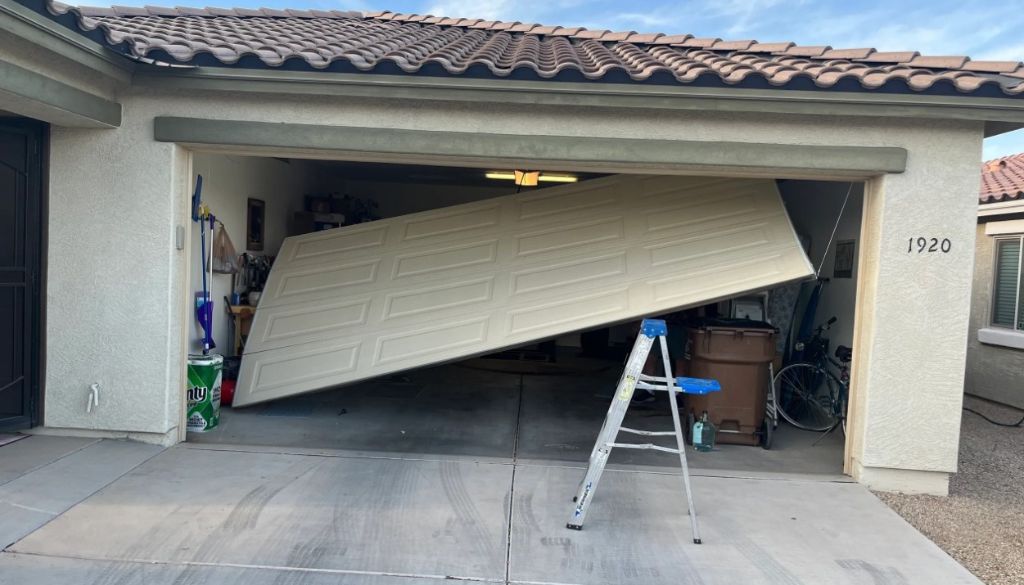
One of the clearest warning signs is a door that no longer journeys efficiently. If one side increases faster than the various other, if the bottom side looks inclined, or if the door shudders heading up, you are checking out more than typical aging.
In domestic garage door repair, unequal traveling commonly traces back to cable wear, spring discrepancy, worn rollers, or curved track areas. Occasionally it begins after a small impact, professional fix garage door such as a wastebasket bumping the lower track or a motorist touching the door panel with a bumper. The damage might look cosmetic at first, however garage door systems rely on equilibrium. Once that equilibrium is off, each cycle adds tension in position that were never ever suggested to bring it.
On commercial doors, the stakes are even higher. A hefty sectional or rolling steel door that binds during operation can damage lorries, interfere with deliveries, and produce a safety and security trouble for team. Commercial garage door repair frequently involves larger springs, much heavier hardware, and much more regular obligation cycles, so early signs and symptoms must never ever be combed aside.
A door that jerks or delays mid-travel can also puzzle the opener. Modern openers are designed to sense resistance. If the door unexpectedly binds, the motor may reverse, stop, or maintain attempting until interior components wear out. I have seen openers replaced when the genuine perpetrator was a failing springtime or a slightly twisted track. The electric motor got criticized because it was the visible part, yet the door itself was the problem.
Slower response generally suggests expanding strain
Most individuals observe an unsuccessful door. Fewer notification the steady stagnation that comes prior to it. If you press the wall switch or remote and the door hesitates for a second or more before moving, do not overlook it. That pause can imply an aging capacitor in the garage door opener, signal concerns, sensing unit problem, or a door that has actually ended up being also heavy for the system.
A properly well balanced garage door should be very easy for the opener to overview. The opener is not meant to dead-lift the complete weight of the door. Springs do that job. When springtimes damage, the opener makes up, at the very least for a while. During that period, the signs and symptoms can be refined. The door might still open up, however the motor sounds even more struggled, the chain or belt appears a lot more active than common, and the traveling comes to be less confident.
This is where delayed maintenance becomes costly. A spring problem left alone can cause opener failing. After that what might have been a solitary garage door spring replacement develops into springtime work plus a new motor or drive assembly. That is not an unusual sequence.
Gaps, drooping, and visible wear should have a closer look
Many warning signs are visible before they impact operation. Stand inside the garage with the door shut during daylight. If you see unusual voids along the bottom or sides, something might be out of positioning. Weather removing breaks over time, which alone is not usually a major repair work, yet unequal voids can disclose track issues, panel bending, or structure changes affecting the opening.
Wood doors may sag with age and dampness exposure. Steel doors can damage and fold. Protected panels can divide at the seams. If the leading area bows when the opener pulls it, the support strut might be missing out on, loose, or insufficient for the weight of the door. I have actually additionally seen doors after a current garage door installment where the equipment was correct however the mounting around the opening had movement that was never dealt with. The result was a door that looked penalty at first and after that started securing inadequately within a season.
Cables are worthy of special interest. Frayed lift cable televisions typically show damaged hairs near the bottom brace or drum. If you see that, stop making use of the door and ask for service. A cable that lets go under lots can create the door to drop crookedly or jam hard in the tracks.
Rollers likewise tell a story. Broken nylon rollers, unsteady stems, and steel rollers with worn bearings can all produce sound and rough activity. They do not usually fail all at once. They degrade individually, which is why the door may seem just somewhat harsh at first.
The safety and security reversal system must never ever be taken on faith
Every automated door should reverse when it satisfies resistance and ought to not shut if the photo-eye sensors are blocked or misaligned. Lots of people presume that because the door still opens and shuts, the security system must be fine. That is a mistake.
The turnaround system is not optional. It is one of one of the most crucial protections in the whole arrangement, specifically for households with kids, pets, or regular foot web traffic via the garage. On the industrial side, where doors might operate around loading activity, the significance is even greater.
Here are a few indications the safety system requires focus:
The door starts down and quickly reverses without a clear obstruction. The opener lights blink and the door declines to shut from the remote. The door closes only when the wall surface button is held down. The sensing unit lenses show up dirty, loosened, or out of line. The door does not turn around when it meets a company blockage throughout a proper test.Sometimes the solution is straightforward, such as cleansing the lenses or readjusting sensing unit placement. In some cases the issue remains in the circuitry, control board, or pressure settings. What issues is not guessing. A door that closes unpredictably is a severe hazard.
When the opener is the sign, not the cause
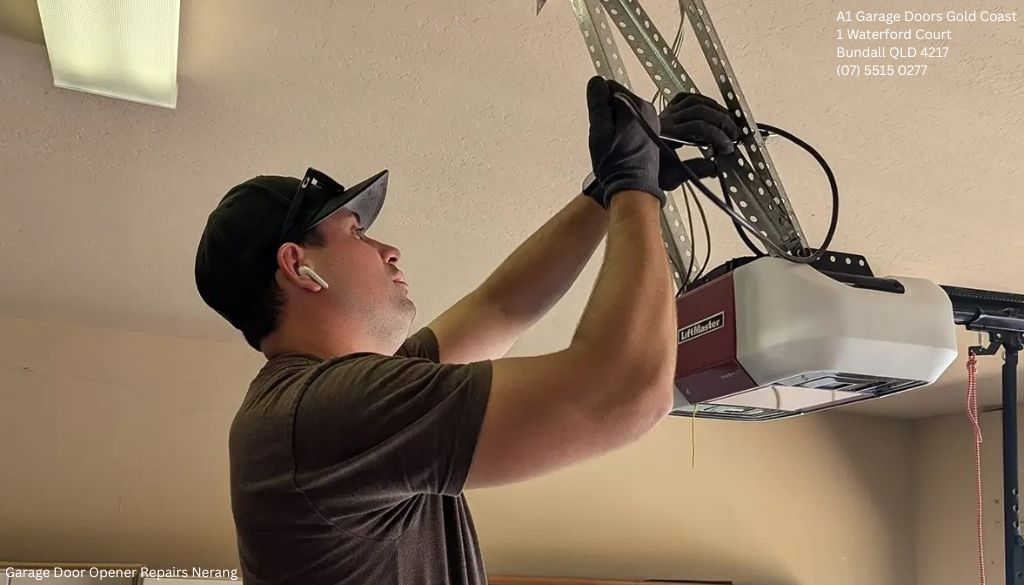
It is easy to assume the garage door opener is falling short whenever the system acts strangely. Often that holds true. Gears break, reasoning boards fail, chains loosen up, and take a trip limits drift. However an opener usually exposes problems elsewhere in the system.
If the opener drinks on its placing braces, that can point to too much door resistance. If the rail bends more than common, the door may be heavy from weak springs. If the opener runs but the door hardly relocates, the drive equipment or trolley might be removed, however that damage may have happened since the opener was strained for months.
I when looked at a door where the homeowner had changed the opener battery, the remote, and at some point the entire opener, yet the door still battled. The real concern was a pair of weary torsion springtimes that had actually shed sufficient lift to make the door really feel almost two times as hefty to the operator. Once the springtimes were replaced and the equilibrium was set properly, the brand-new opener all of a sudden seemed much more capable. It was not a wonder. It was proper tons distribution.
That is why a good service check out checks the complete system, not simply the electric motor system. Garage door repair is rarely concerning one separated part.
The concealed price of requiring a persistent door
A shocking variety of significant repair work start with an easy choice: somebody keeps pushing the switch. The door is reluctant, reverses, or raises a few inches, and the individual attempts again. However. The opener keeps drawing, the top area pressures, the trolley bangs, and a convenient concern ends up being a larger one.
If the door is withstanding, something is incorrect. It might be adhered the flooring in winter, blocked by debris in the track, or unbalanced as a result of a springtime trouble. The appropriate feedback is to quit and evaluate, not compel the cycle.
With industrial systems, duplicated efforts can be much more damaging due to the fact that the equipment is larger and the electric motors are a lot more powerful. I have seen bottom sections folded up, drums harmed, and track supports twisted since a door was repetitively pursued a cord leapt the drum. In business garage door repair, downtime matters, yet pressing through a breakdown generally develops even more downtime, not less.
Weather changes usually reveal existing weaknesses
Garage doors have a tendency to fail at bothersome times, cold early mornings, warm front, hefty rain, or the first busy day after a vacation closure. Climate is not always the cause, however it commonly reveals a system that was currently near its limit.
Cold weather condition thickens lubricants, stiffens worn rollers, and can make fragile components lastly give way. Moisture can swell wood, rust hardware, and compromise the bond on older climate seals. Heat can influence older electronics and batteries in remotes and keypads. Seasonal growth and tightening can additionally alter how a door takes a trip in the opening, especially on older frameworks where framing and slab activity already exist.
That is why I commonly suggest homeowners to take notice of changes that show up "all of a sudden" with the weather. The climate might only be disclosing a problem that has been developing for months.
New setup does not guarantee years of neglect-free service
A recent garage door setup need to decrease the possibility of major problems, however it does not get rid of the requirement for monitoring and maintenance. Setup quality matters, and so does how typically the door is made use of. A family members that uses the garage as the primary entrance might cycle the door a thousand to fifteen hundred times a year, occasionally much more. A hectic service can far surpass that in a month.
New doors can establish issues if the initial springtime sizing was limited, the opener settings were never called in, or the environment is difficult on equipment. Coastal air, dirt, temperature level swings, and high usage all speed up wear. Also a great installation benefits from regular adjustment.
If a brand-new door starts making noise, moving about, or losing its seal, do not assume it simply needs time to "barge in." Garage doors are not intended to resolve into trouble. Early adjustment matters.
How to tell when the problem is urgent
Some garage door problems can wait a day or 2 for a scheduled appointment. Others should be treated as instant safety and security issues. Broken springtimes, torn cable televisions, doors hanging crooked, doors that will certainly not stay open, and doors that bang closed all belong in the urgent group. So do openers that stop working to turn around appropriately or doors that have come partially out of the tracks.
Here is a functional guideline for homeowners and building supervisors:
If the door looks unequal, stop utilizing it. If you listen to a loud breeze or bang, presume a spring or cable problem up until tried and tested otherwise. If the opener pressures or the door feels unusually heavy, do not maintain biking it. If security sensing units or reversal attributes do not work, disconnect automated usage until repaired. If a business door influences staff member or car gain access to, treat it as a same-day problem.That might sound cautious, but garage doors are among the largest moving elements on a home. Valuing the warning signs is good judgment, not overreaction.
What regular attention can prevent
Preventive service does not need to be intricate to be effective. Many systems gain from periodic examination of springs, cords, rollers, hinges, tracks, seals, and opener settings. Lubrication, firm of equipment, balance checks, and sensor testing catch a big share of issues prior to they come to be failures.
For household garage door repair, preventive maintenance typically conserves cash by extending the life of the opener and reducing emergency situation calls. For industrial garage door repair, it additionally shields organizing, accessibility, and staff member safety. If a service depends upon a functioning overhanging door for shipments or safe and secure storage space, upkeep is not an added. It belongs to running reliably.
One detail worth mentioning is cycle life. Springs are ranked for a specific number of cycles, not a specific variety of years. Two houses with the very same door can wear springs at really various prices relying on how commonly they use the garage. The very same reasoning relates to industrial doors, only a lot more so. A warehouse door made use of loads of times a day will mature extremely differently from a lightly utilized service bay.
Choosing fixing over delay
There is an usual minute in virtually every solution call where the owner says some version of, "I observed that a while earlier, yet I didn't assume it was significant." Usually they mean the noise, the slight droop, the sluggish opening, or the occasional opposite. That reaction is easy to understand. Garage doors often keep working while they are wearing out.
But that is precisely why warning signs issue. They are very early signals, tentative failings. A practical garage door repair at the correct time can avoid a more pricey chain of damages. It can also protect against the type of security risk people do not think about up until something decreases, binds, or shuts when it should not.
If your door is louder than it utilized to be, slower than regular, noticeably irregular, or harder on the opener, count on that instinct that states something has actually changed. Whether the solution is a minor adjustment, a garage door spring substitute, opener solution, or a bigger repair work, very early activity usually gives you much better alternatives than waiting for a total breakdown.
A garage door need to move with constant self-confidence. When it begins asking for help, listen.